

April 16, 2026
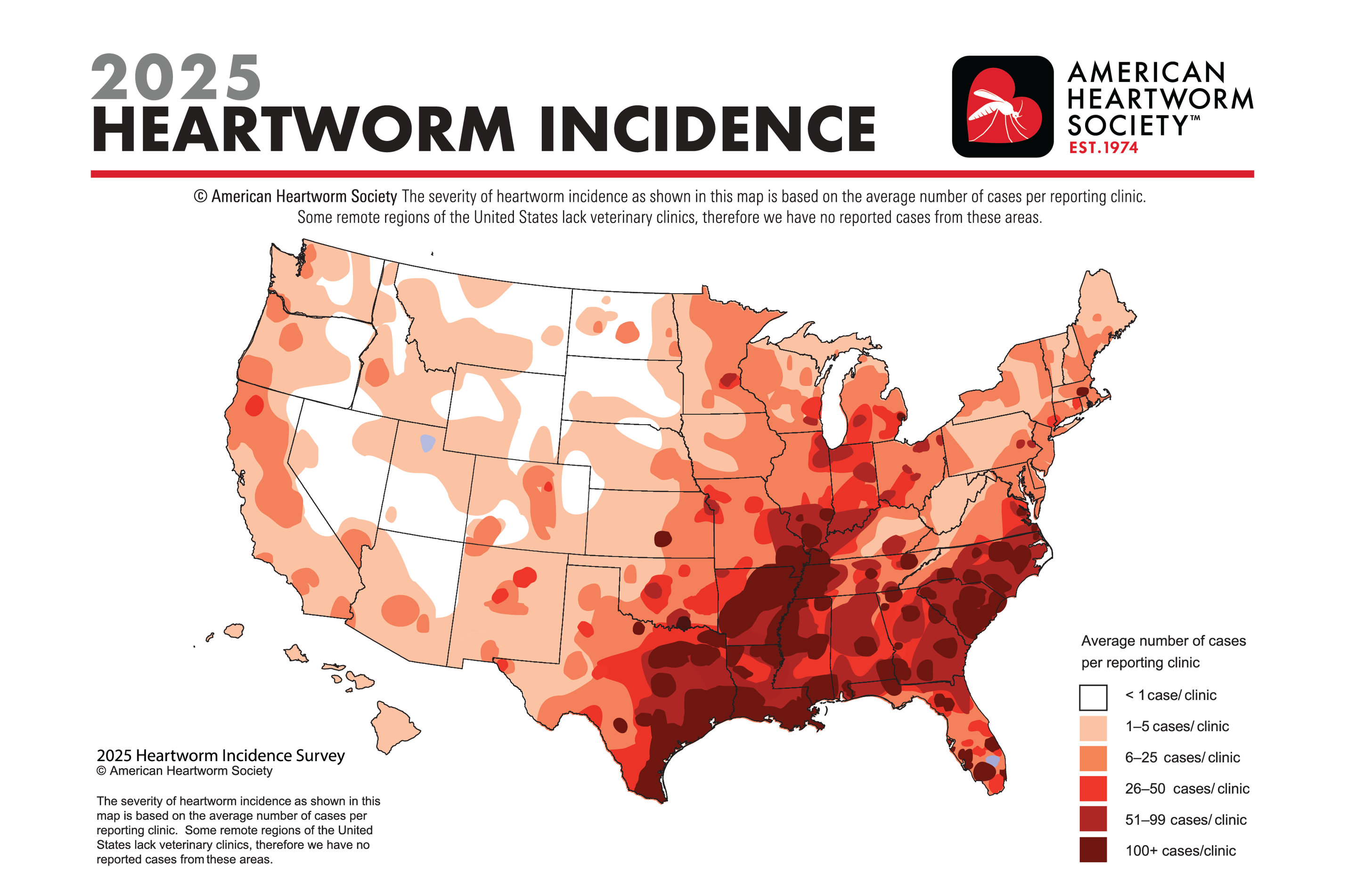
Every three years, the American Heartworm Society (AHS) conducts a heartworm incidence survey with U.S. veterinarians and shelters. Through this survey, the AHS gathers testing data from heartworm tests conducted the previous calendar year by veterinarians and shelters across the country. The Society also surveys participants for insights on what factors are driving incidence trends in their practice areas. The AHS then takes the data and creates a color-coded U.S. map that shows the density of diagnoses.
The South remains a heartworm stronghold.
Since the AHS began conducting its incidence surveys in 2001, the South and Southeast have consistently had the highest rates of heartworm diagnosis. Given that heartworm is a mosquito-borne disease, it makes sense that cases are most common in warm, humid regions where mosquitoes proliferate and remain active throughout the year. The top 10 states for heartworm incidence tend to remain constant, although the order varies from survey to survey. In fact, for the first time Texas topped the list. The remaining top ten states were Louisiana, Arkansas, Mississippi, South Carolina, Tennessee, Alabama, North Carolina, Florida and Georgia.
New hot spots, where the density of diagnosed infections has increased since the survey was last conducted three years ago, included east Texas, the Florida Panhandle, Southwest Florida, the central Carolinas and southern Illinois.
Heartworm incidence numbers remain steady.
The AHS Incidence Survey had two components: (1) data submitted voluntarily by practices and shelters across the U.S.; and (2) a short, multiple-choice survey completed by participants that provides insights on the reasons behind the trends. In the just-completed survey, almost 3 in 5 (59%) of practitioners said heartworm rates had “stayed the same” in their practice area, with the remainder divided between those who saw rates increase (19%) and those who saw a decrease (22%). Just 10% of respondents reported seeing no heartworm cases during the 2025 calendar year.
Heartworms are spreading to new areas.
A troubling finding from the latest incidence survey was that heartworm cases are gradually spreading to new areas and in some cases are being diagnosed more often where heartworm once was relatively uncommon. These areas include southern California, southwest Colorado, central Wisconsin and western Virginia. Cases also increased in areas of the western and mountain western states that previously had few or no cases. This expansion of heartworm cases reinforces why annual testing and year-round prevention are so important.
Incidence changes were chalked up to multiple factors.
There’s no question that weather can be a factor when heartworm incidence rates go up or down. For example, severe weather events like hurricanes, which result in flooding, standing water and household loss can trigger conditions conducive to both mosquito proliferation and interruptions in preventive health care practices. By the same token, drought conditions can be associated with decreased mosquito populations and, subsequently, lower rates of heartworm transmission.
However, while veterinarians participating in the AHS survey ranked weather as an important factor in heartworm incidence, they were even more likely to connect incidence trends with human factors such as changes in prevention compliance and the movement of heartworm-positive dogs into their practice area. These serve as good reminders to advise clients to make heartworm prevention a year-round habit and, in cases where heartworm-positive dogs must be relocated, to follow the AHS recommendations on minimizing transmission.
Veterinarians rely on AHS resources.
One of the most important priorities of the AHS is the development and maintenance of research-based scientific guidelines for veterinarians on canine and feline heartworm disease. Along with information on heartworm epidemiology and biology, these guidelines provide practice guidance on the parasite’s prevention, diagnosis and treatment.
According to the survey, more than 8 in 10 veterinarians surveyed (84%) reported that they follow the AHS guidelines on heartworm testing, prevention and treatment. Meanwhile, almost two-thirds report visiting the AHS website for clinical information on heartworm and more than half use AHS’ client education tools.
Along with viewing the new 2025 Heartworm Incidence map, visitors can also check out AHS maps dating from 2001-2022.

President, American Heartworm Society
NOTE TO SUE: PLEASE PROVIDE A BRIEF AUTHOR BIO HERE. (250 WORDS OR LESS)